
Arrest Warrants in Palo Pinto County
Texas arrest warrants usually begin with a sworn complaint. An officer or prosecutor presents that affidavit to a magistrate. The magistrate then asks one question: do the facts show probable cause that this person committed the offense? If yes, the judge signs. That signature directs officers to bring the named person before a magistrate. In Palo Pinto County, the path to a warrant depends on the alleged offense and the court with authority over it. A city police case, a sheriff's case, and a district court filing can each involve different offices. So confirm the source before anything else. Ask the issuing court or the investigating agency directly. An online booking display alone cannot show whether an arrest warrant is still active.
How a Palo Pinto County Arrest Warrant Reaches a Magistrate
The investigating agency builds the file in a Palo Pinto County case. It might be the sheriff's office. It might be a city police department. The agency presents a complaint or affidavit through the criminal process, and the magistrate decides probable cause. Which court later handles the charge turns on its level and location. Felonies work differently in one respect. A grand jury indictment can produce a capias. That paper directs an arrest after indictment, and its origin differs from a complaint-based warrant. Anyone verifying a record should keep the citation, cause number, court notice, or agency reference close at hand. A name-only web search can miss cases or confuse people with similar names. It can also show an old event without its current status. Ask the clerk which court file controls before trusting a secondary result.
What a Palo Pinto County Arrest Warrant Contains
An authenticated Palo Pinto County warrant names the person and the order officers must execute. The case number and issuing authority matter most. They match the paper to a court file. The county publishes no single warrant-number format and no countywide online warrant docket, so treat any generic format as unofficial. Ask the clerk for the controlling file.
| Person Identified | The name and any identifying description included in the signed order. |
|---|---|
| Offense | The alleged offense or basis stated in the warrant; it is an allegation, not a finding of guilt. |
| Issuing Authority | The judge or magistrate who issued the order, which helps identify where to ask about the case. |
| Cause or Warrant Number | A reference used by the issuing court or agency. Confirm the number directly because no single public county format was located. |
| Bond Information | Any bond decision shown on the record. A bond may be set or reviewed through the court process. |
| Date and Signature | The issue date and judicial authentication distinguish the order from an arrest log entry. |
Which Palo Pinto County Officers May Serve Arrest Warrants
The Palo Pinto County Sheriff's Office is the county's main law-enforcement contact. Municipal police handle matters inside their city limits. Constables carry statutory process duties too. Which agency executes a particular order depends on the case, the issuing court, and the assignment. No local office publishes a county warrant-unit roster. There is no single dedicated serving team. The county's public agency directory does help sort sheriff, police, and constable contacts apart. It cannot confirm that a warrant exists or name the assigned officer. Use it for routing only. For agency names and office categories, see the Palo Pinto County Sheriff's public agency directory. That page lists offices and contacts; it is not a live warrant search.
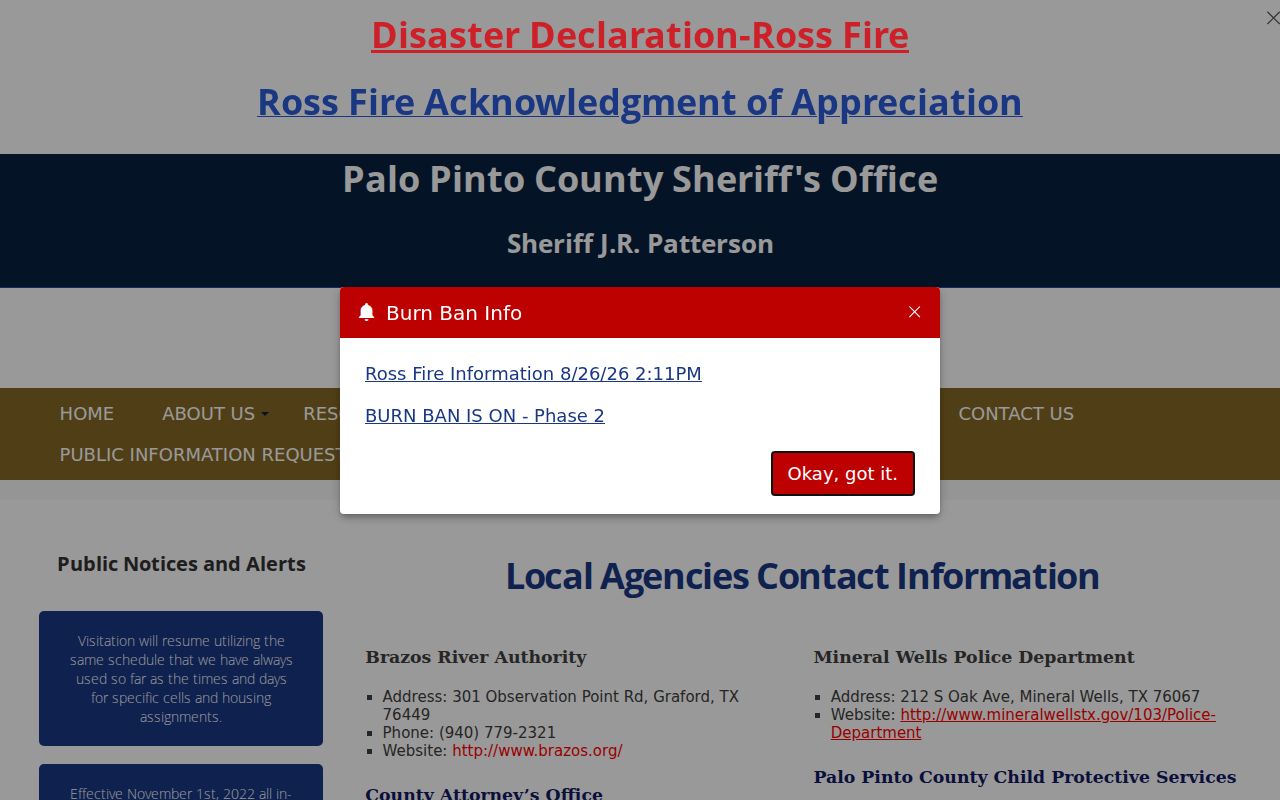
The directory posts no Palo Pinto County warrant roster. A clerk or the law-enforcement agency holding the order must confirm it.
How Arrest Warrants Are Served
Serving a warrant means taking the person into custody and bringing them before a magistrate, as the law requires. It can happen during any officer contact. Do not assume the order vanished because of an old record, a past address, or the lack of a mailed notice. No Palo Pinto County office publishes a service schedule, a countywide surrender calendar, or any promise of advance notice. Notice is not required. Booking and magistrate proceedings then create a record trail after the arrest. The jail's inmate or booking interface can locate someone already in custody. That is not an index of unserved warrants. Bond, charge status, and release conditions should be verified with the court or jail handling the particular case.
Palo Pinto County Booking Records Do Not Equal an Arrest Warrant Search
Palo Pinto County's sheriff site links out to an Interop inmate and booking interface. That tool covers people in custody and recent bookings. It is not a warrant list. Someone can have an active warrant and never show up on an inmate roster, and a booking entry alone will not tell you whether a separate warrant is still outstanding. For a real warrant check, go to the court record and the agency that holds the case. A cause number helps: the County Clerk's criminal-record instructions say a case number is required, and criminal records do not come through a countywide online name search. District Court records sit with a separate clerk contact. Figure out which court level first, then call the right office.
Arrest Warrant vs Summons vs Bench Warrant
Three papers, three jobs. A Palo Pinto County arrest warrant comes after a judge finds probable cause and lets officers take someone into custody. A summons covers the same accusation but just tells the person to show up in court on a set day. Then there is the bench warrant, which a judge issues when someone misses a court obligation. The label on a third-party search result matters far less than the issuing court and the cause behind it. If the problem is a missed appearance, the bench warrant page walks through that route in detail.
| Feature | Arrest Warrant | Summons | Bench Warrant |
|---|---|---|---|
| Purpose | Authorizes custody based on probable cause. | Orders a person to appear as directed. | Enforces a missed court obligation. |
| Starting point | Complaint or affidavit reviewed by a magistrate. | Charge or proceeding where a court directs appearance. | Failure to appear, comply, or satisfy a court order. |
| Next step | Confirm the issuing court and seek legal advice. | Attend on the date and follow the notice. | Contact the court that issued it about recall or resolution. |
Palo Pinto County Arrest Warrant Records May Be Restricted
Not every paper behind an arrest warrant is open for public inspection in Palo Pinto County. A sealed affidavit or an investigation record may carry access limits, and juvenile records get separate protections. So a search that turns up no public document does not prove no order exists. Court staff can explain what is available for a particular case and which restriction applies. For criminal files, start with the clerk for the court that holds the cause. The County Clerk keeps county-level records but asks for a cause number on criminal record requests, and District Clerk materials follow a separate route. Hold off on sending sensitive personal details through a general online form unless the office directs you to.
Federal Warrants Follow a Separate Court Route
A federal arrest warrant tied to a Northern District of Texas case is not a Palo Pinto County warrant. It runs on federal paper. Filings, dockets, and court staff all work from the federal case number and district procedures. The county sheriff can help with law enforcement steps, but the county clerk has no power to resolve or recall a federal order. Read the paperwork. If it names a federal district or a magistrate judge, go to the originating federal court or talk to a lawyer. A state driver-compliance notice from DPS raises a different confusion. That notice is not an arrest warrant search result, and DPS records answer different questions than court warrant records do. Match each document to its issuing authority before you pay a fee or act on an online result.
What to Do If There Is a Warrant for You
Confirm before you assume. A booking page or an incomplete warrant search can mislead, so use the cause number and call the issuing court in Palo Pinto County to verify the order. A lawyer can then advise whether voluntary surrender, posting bond, or a motion to recall or quash fits the case. The right path turns on the charge and the court. The county offers no single walk-in process that clears every warrant the same day, so follow the steps the issuing court gives you.
Important: Speak with a lawyer about safe next steps; an active warrant can lead to arrest during an officer contact, and an online absence does not prove it was recalled.